Our operations
Safety at TransAlta
Fostering a culture where we work and learn together to stay safe.
Safe, reliable and incident-free operations are critical to our success.
We are committed to protecting the public, the environment, the company’s physical assets, and the physical, psychological, and social well-being of our people.
Meeting this commitment is a corporate responsibility for TransAlta and the personal responsibility of each employee and contractor working on our behalf.
Our safety principles
Our approach to safety is grounded in these tenets:
- Safe production is the only production
- We do not start work until it is safe to do so
- Everyone has the authority and responsibility to stop unsafe work
- Mistakes often result from well-meaning behaviours intended to get the job done
- Leader response to mistakes directly impacts the culture of both learning and accountability
- Our processes enable us to predict, prevent or manage most error-prone situations
- We maintain our systems and processes to manage uncertain operational outcomes
- We work together to create a learning, engaged and collaborative team
Health and safety
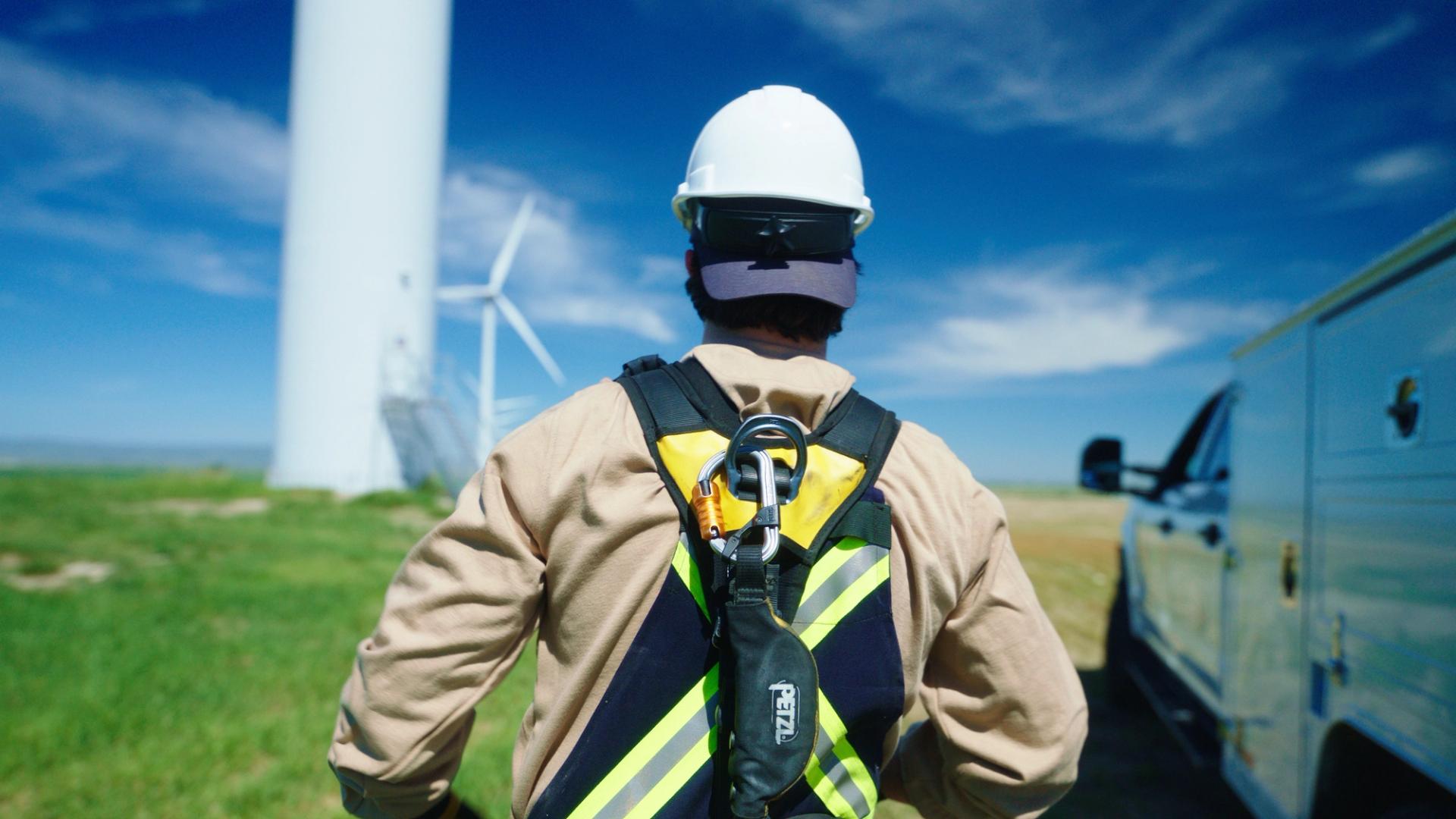
At TransAlta, safety is a core value and is the foundation of how we operate. While generating affordable and reliable electricity for our customers is important, nothing is more important than the health and safety of our people and the communities we serve. We are committed to fostering a culture where we work and learn together to keep each other safe.
Our management systems underpin the delivery of safe, reliable and competitive electricity to our customers and partners. TransAlta's Total Safety Management System is a combination of recognized best practices in serious injury and fatality (SIF) prevention, process safety, risk management, asset management, occupational health, energy-based safety and environmental management.
At TransAlta, safety is a core part of everyone’s role and a shared responsibility. As our safety culture maturity progresses, we are focused utilizing the principles of human and organizational performance to cultivate a positive safety experience for everyone.
Emergency management and security
We are committed to protecting our people and the public as well as recovering quickly in the event of an emergency. TransAlta’s Emergency Management Program prepares employees should an emergency incident occur. The program provides an overarching framework for each business unit to provide an Emergency Response Plan and Business Continuity Plan.
We implement our Incident Command System, which is a standardized on-scene emergency and incident management system that provides an organizational structure capable of responding to single or multiple incidents. Designed to aid in the management of resources during incidents, it combines facilities, equipment, personnel, procedures and communications operating within a common organizational structure. It is used as part of an all-hazards approach for incident management and is officially recognized for multi-agency response in emergency situations, however complex the incident might be.
We work to prevent incidents and lower our risk by administering security controls such as restricting physical access around and into our operating facilities. The use of security technology such as surveillance cameras and electronic access is utilized to ensure the control of secure areas. Regular audits and security risk assessments are conducted to ensure continuous improvement of the Security Management Program.
Environment
At TransAlta, we operate our facilities in line with best practices related to environmental management standards. Our environmental management processes are verified annually to ensure we continuously improve our environmental performance.
In 2024, TransAlta conducted our first nature-related risks and opportunities assessment, achieving our 2022 sustainability target to "assess and disclose nature-related risks and opportunities including TransAlta’s dependencies and impacts on ecosystems, land, water and air" by 2024.
We chose to follow The Taskforce on Nature-related Financial Disclosures (TNFD) recommendations where possible, as a commitment to using internationally recognized methodologies. The analysis utilized the TNFD guidance on assessing nature-related issues—the Locate, Evaluate, Assess, Prepare (LEAP) approach—in conjunction with the TNFD Additional Sector Guidance – Electric Utilities and Power Generators published in June 2024.